
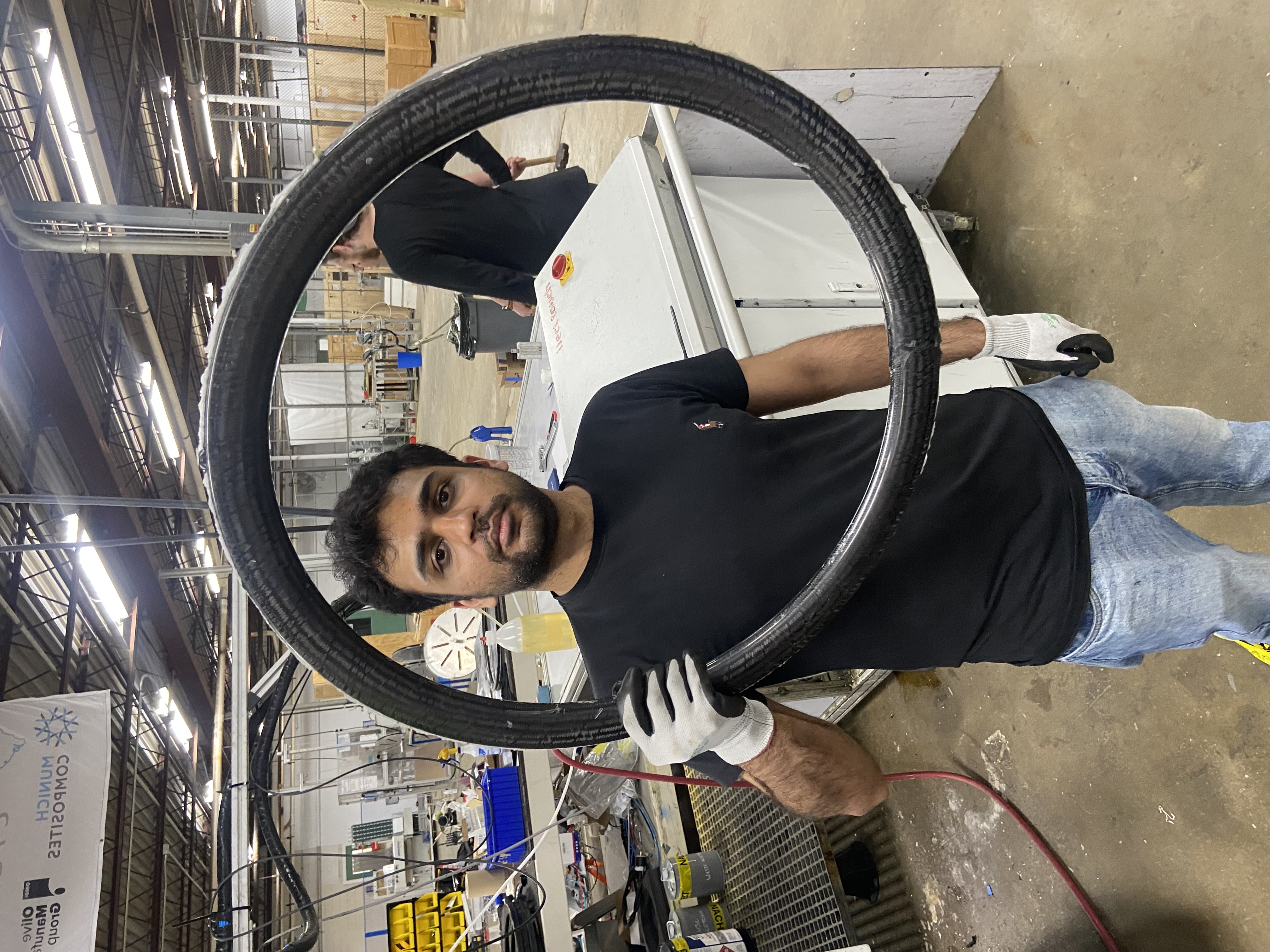
Portfolio / Carbon Rim Impact Testing

Carbon Rim Impact Testing

Boyd Cycling

Engineering Internship at Boyd Cycling & Time Bicycles

Engineered a custom "Guillotine" wheel-impact testing rig in a rapid 72-hour design-build sprint. Designed, fabricated, and iterated on the system within a 3-day window to meet UCI standards for carbon fiber rim durability testing.

Carbon Rim Impact Testing

Project Overview

Design and fabrication of a custom impact testing apparatus to validate carbon rim durability and meet international safety standards.

The Challenge

Boyd Cycling required an immediate solution to test rim durability against impacts to meet UCI safety standards. With a tight deadline, the team needed a functional, standardized testing rig designed and built from scratch in just three days.

Engineering Solution

I executed a high-intensity 72-hour sprint to design, build, and iterate a custom "Guillotine" impact tester. This rapid prototyping process required utilizing available resources—repurposing facility equipment and scrap materials—to construct a precision instrument. The resulting system allows for adjustable drop heights and anvil weights, providing versatile testing capabilities for various rim profiles.

Simulated Impact Force vs. Time Data

Key Technologies

Custom Machine Design
CAD Modeling
Fabrication
UCI Standards

The "Guillotine" Impact Tester

Custom-built apparatus for standardized impact testing

High-speed capture of the "Guillotine" impact tester in action, demonstrating the precise energy transfer to the carbon rim.

Rapid Design & Function

The "Guillotine" was engineered and assembled within a strict 72-hour window. Despite the compressed timeline, the system features a weighted anvil that drops from adjustable heights, allowing for controlled energy transfer to the rim structure. This setup enables testing to UCI standards and beyond, simulating pothole strikes and other road hazards.

Resourceful Fabrication

Meeting the 72-hour deadline required creative resource utilization. I repurposed heavy-duty inventory shelving to construct the main structural frame and integrated an electric winch with a garage door remote for safe, wireless activation. Miscellaneous scrap metals were salvaged, machined, and welded to fabricate the guide rails and impact anvil. This approach transformed available materials into a precision testing rig without waiting for external suppliers.