Re:3D - Waste Plastic to Printed Parts
Research & Development Engineering Intern · Austin, TX · Summer 2026
Built an end-to-end material reclamation process that turns military base waste into 3D-printable feedstock, then proved it out by printing a flight-ready drone frame on large-format FGF pellet printers.
Material Reclamation
Turning M61 gas filter canisters into printable recycled polypropylene
Challenge
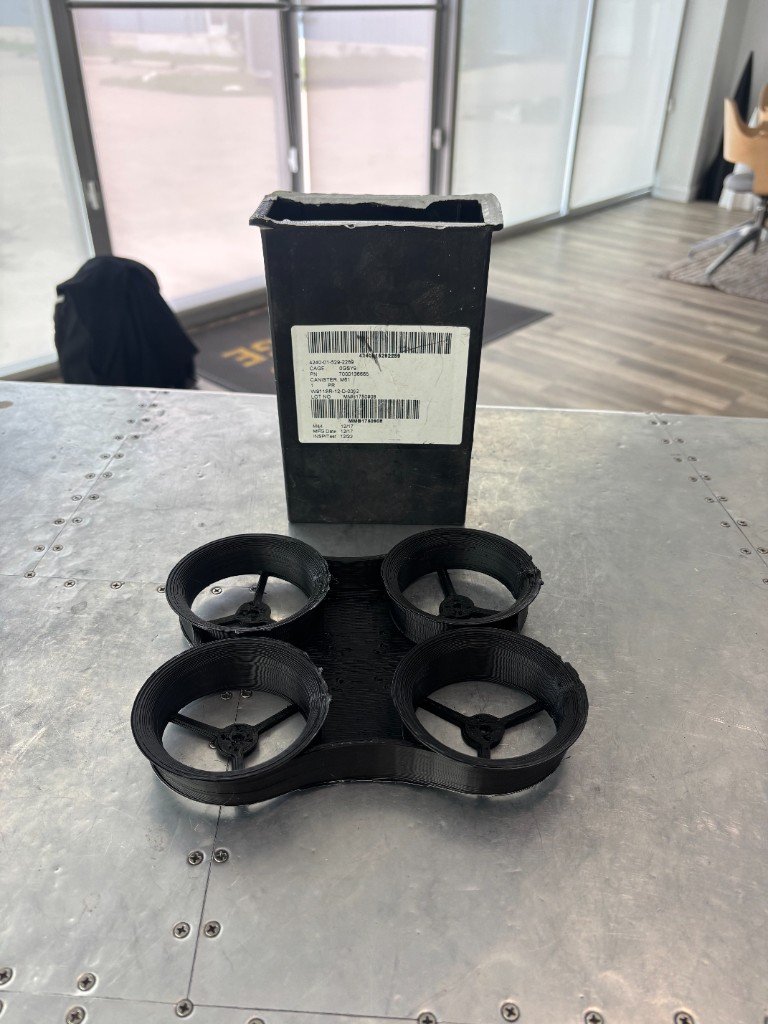
Spent M61 gas filter canisters are a steady waste stream on military bases, and the polypropylene in them is good material bonded to adhesives and contaminants. Nothing about the part as-received is printable.
Process
Developed an end-to-end reclamation path: strip adhesives and contaminants from the canister bodies, then granulate the cleaned polypropylene into rPP pellet feedstock sized for fused granulate fabrication (FGF) printing. The output feeds the same pellet printers Re:3D builds, with no virgin material added.
Proof of Concept
Used the reclaimed feedstock to print drone frames and completed initial proof-of-concept testing, demonstrating a closed loop from base waste to a functional part for real-world military applications.
Reclamation Loop
Drone Frame - DFM and FEA
Designing around how reclaimed rPP actually prints
Design for Manufacturability
Reclaimed rPP does not behave like virgin filament. I observed how the material laid down on the FGF machines - warp, bead geometry, layer adhesion - and iterated the drone frame's geometry so the design worked with the process instead of fighting it.
Structural Validation
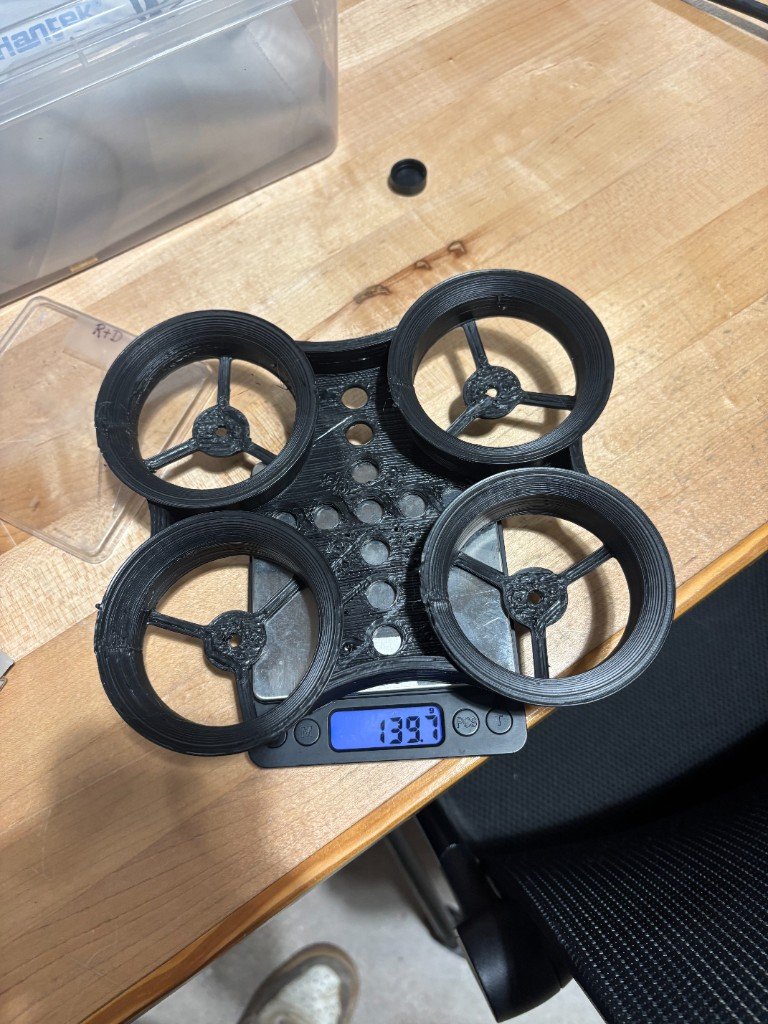
Validated the frame in SolidWorks FEA against loads at maximum throttle, landing on roughly a 3.4x factor of safety while driving mass down to 90 grams. Weight and margin were traded against each other explicitly rather than being an afterthought.
Frame Results
Printer Fleet & Print Profiles
Getting machines back into production and qualifying new materials
Machine Recovery
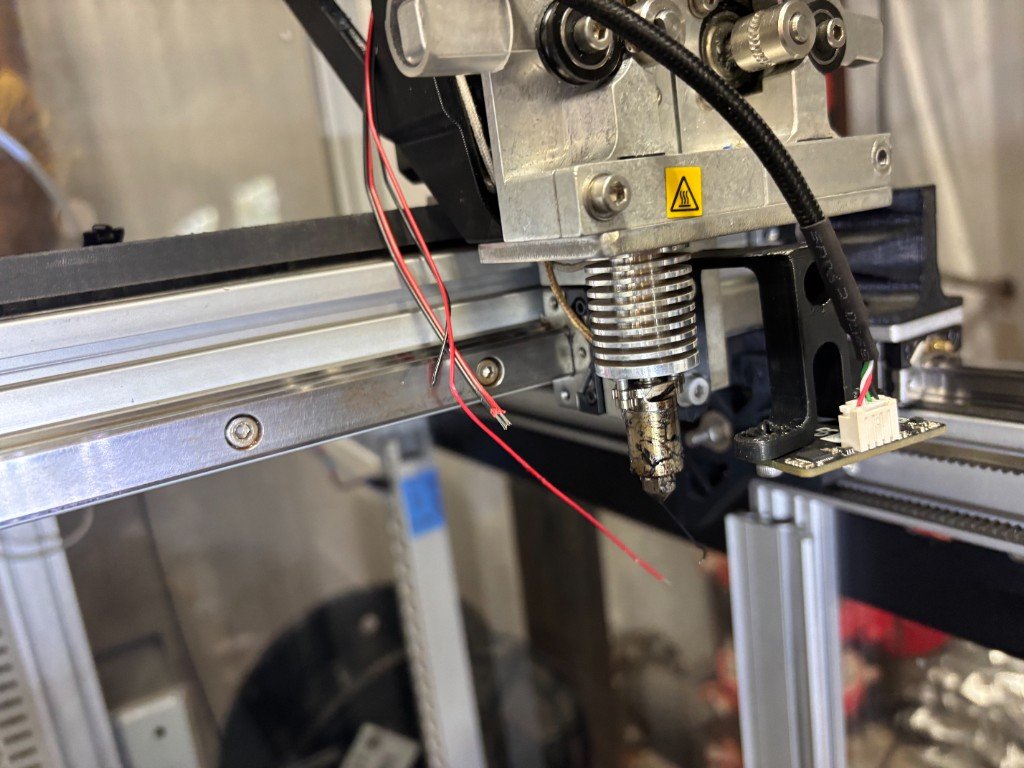
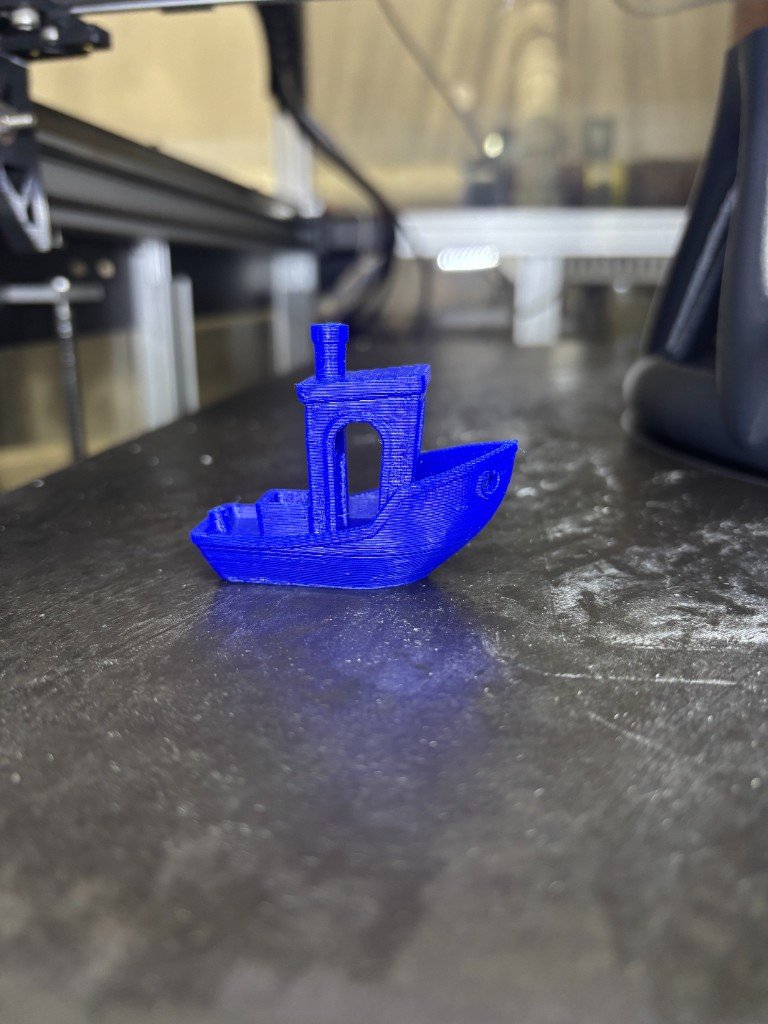
Diagnosed and repaired hardware faults across broken and idle printers - Klipper MCU errors, stepper driver failures - and returned them to production with upgraded components. Test parts designed in SolidWorks confirmed each machine was back within tolerance, and two of those parts were adopted into production.
Profile Development
Developed FGF print profiles for new materials, including a large-format additive manufacturing (LFAM) run producing military pallet replacements under an SBIR grant, and ran contract print jobs for customers on the qualified machines.
Scope
Outcomes
What the summer produced
A Working Waste Stream
The reclamation process takes a waste item that bases already have in volume and returns printable feedstock, closing the loop on-site rather than shipping material in.
Parts That Hold Up
The 90 gram drone frame printed from that feedstock passed structural validation with roughly 3.4x margin at max throttle, which is the evidence that reclaimed material can carry real loads.